Rhino / Grasshopper plugin · IASS 2018 @ MIT
Capybara
Advanced mesh editing and analysis built on optimized C++ libraries — including quad remeshing aligned to stress and curvature fields.
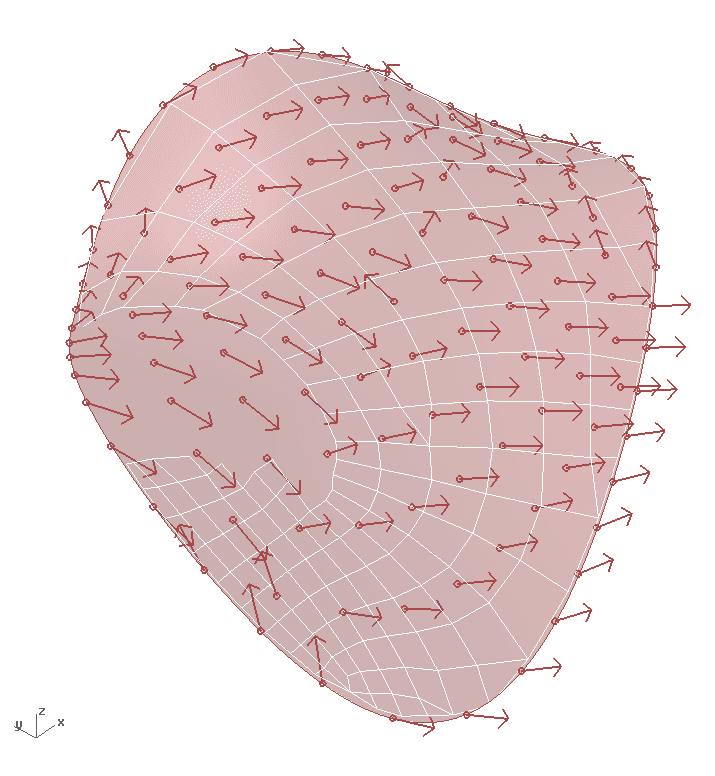
Capybara brings research-grade mesh processing to Grasshopper. It is built on top of optimized, well-respected C++ libraries — CGAL and libigl — so designers get the speed and numerical robustness of state-of-the-art geometry code behind familiar Grasshopper components.
Its headline capability is field-aligned quad remeshing: Capybara can re-mesh any triangle mesh into a clean, quad-only mesh by integrating conjugated stress- and curvature-aligned vector fields — turning an arbitrary surface into one rationalised along its principal directions.
Field-aligned quad remeshing
Triangle meshes are easy to produce but awkward to build from. Quad meshes aligned to a surface’s natural directions are far more useful for fabrication, panelling and structural layout. Capybara computes conjugated vector fields — from curvature, from stress, or blended — and integrates them into a quad-dominant mesh that follows those directions.
- Remesh any tri-mesh into a quad-only mesh.
- Align the result to stress fields, curvature fields, or a user-weighted blend.
- Advanced mesh editing and analysis built on CGAL and libigl.
- Robust, optimized C++ under familiar Grasshopper components.
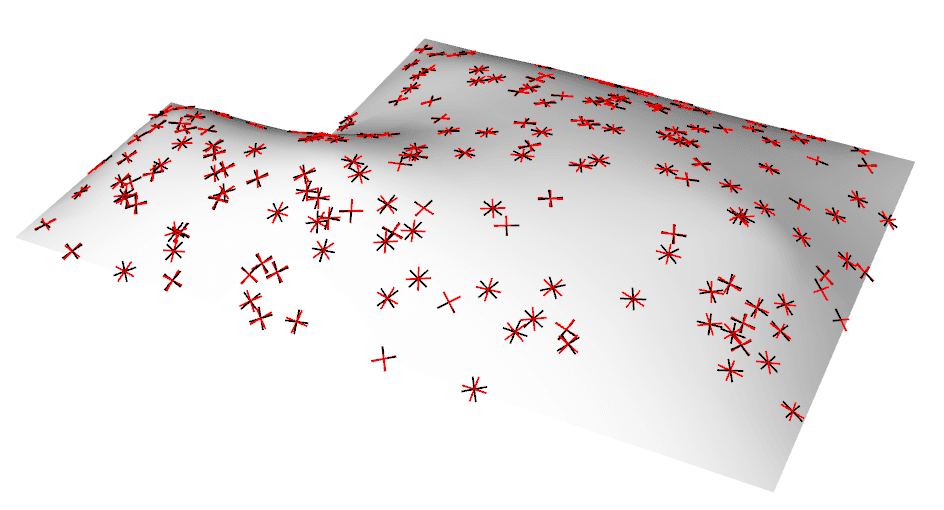
Presented at IASS 2018, MIT
Capybara’s methods were presented at the IASS Symposium 2018 at MIT — part of Raphos’ ongoing engagement with the computational-geometry and shell-structures research community. It pairs well with Dodo, which adds the optimization and machine-learning side of the same toolkit.
More in Grasshopper Plugins
Related work.
Interested in Capybara?
Tell us about your problem — we’ll tell you how we’d approach it.