Paper · 2019
Full-scale identification of aeroelastic effects on a tall building
Finding, in real measurements, where the wind and the moving building start to interact.
Full-scale identification of aeroelastic effects on a tall building, by Daniel Gonzalez-Fernandez, John Macdonald, Branislav Titurus, Lorenzo Greco, Marc Zanchetta and co-authors, 2019.
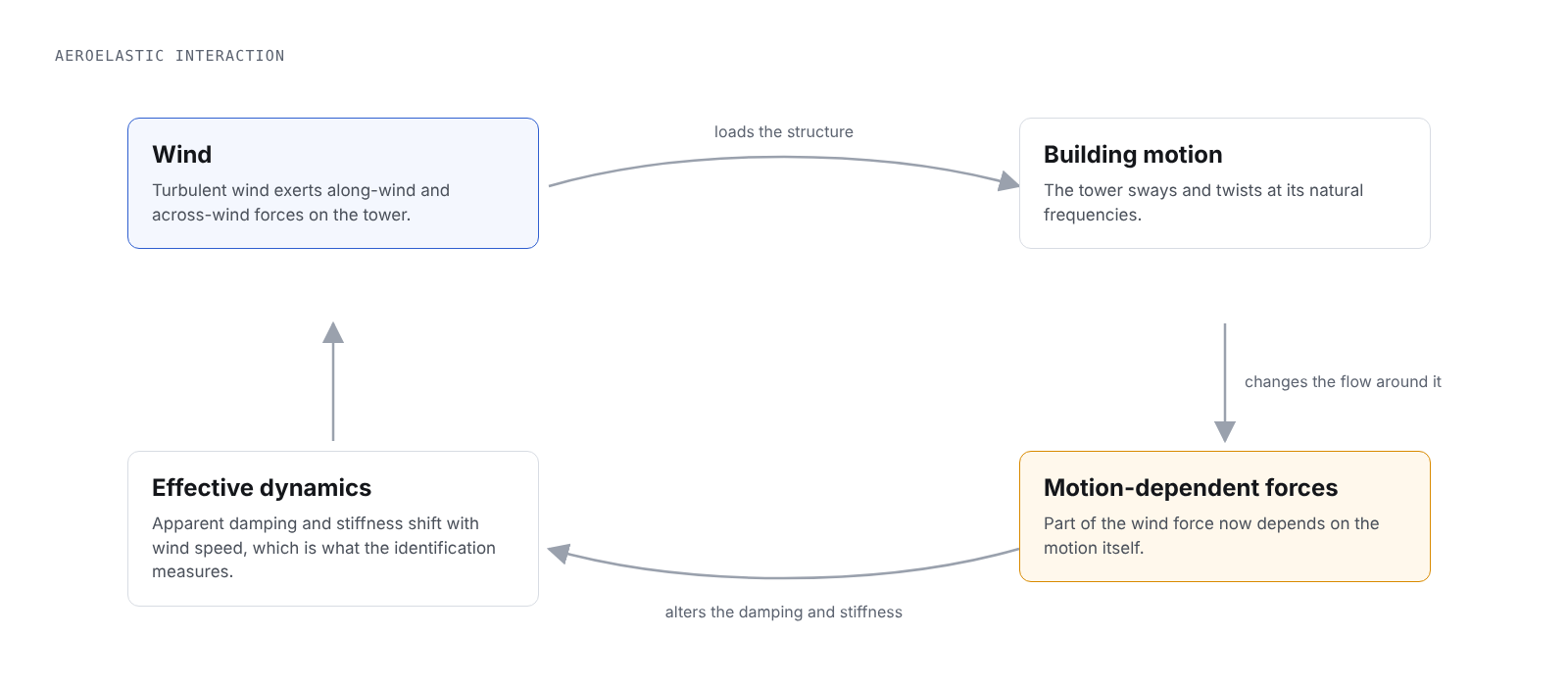
When a tall building moves, its motion changes the wind forces acting on it. These aeroelastic effects alter the effective damping and stiffness of the structure, and are usually studied only in wind tunnels. The paper follows the 2018 London monitoring campaign and identifies them from measurements on the real tower.
Why full scale
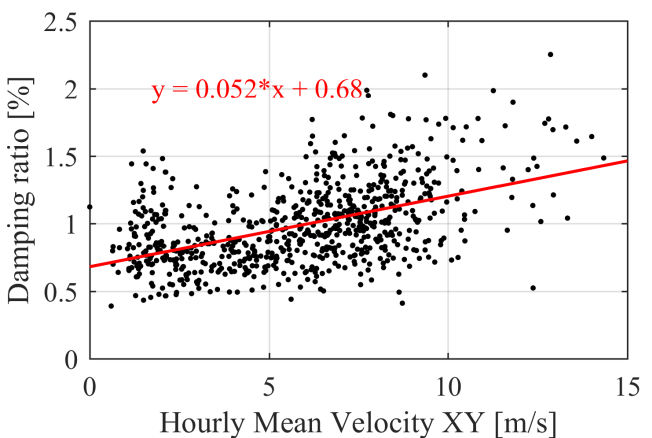
Wind-tunnel models capture a lot, but not everything about a real building: its actual damping, its surroundings, and the turbulence it really sees. The 2018 study had already found the tower’s damping rising with wind speed. This paper goes further, looking for the part of that change that comes from the interaction between the wind and the moving building.
From records to parameters
The study applies system-identification techniques to the measured wind and acceleration records to estimate how the building’s dynamic properties change with the wind, the signature of aeroelastic interaction.
More in Research
Related work.
Interested in Full-scale identification of aeroelastic effects on a tall building?
Tell us about your problem — we’ll tell you how we’d approach it.