Paper · UK Wind Engineering 2018
Wind-induced response of a slender tall building in London
Nine months of measurements on a 150-metre London tower, to see how it really moves in the wind.
Wind-induced response of tall buildings: Case study of a slender tall building in London, by Alessandro Margnelli, Lorenzo Greco, Kyriaki Gkoktsi, Matthew Leeks, Jeroen Janssen, John Macdonald and Marc Zanchetta, presented at the 13th UK Conference on Wind Engineering in Leeds, 2018.
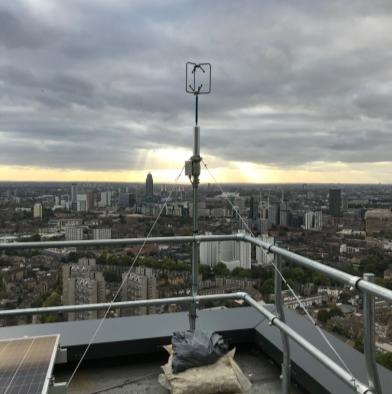
Wind is a main design driver for tall buildings, and as towers get more slender, how they sway matters for the comfort of the people inside. The team installed accelerometers, an ultrasonic anemometer and facade pressure sensors at the top of a newly built 47-storey, 150-metre tower in south central London, and recorded continuously from October 2017 to June 2018.
Instrumenting a real building
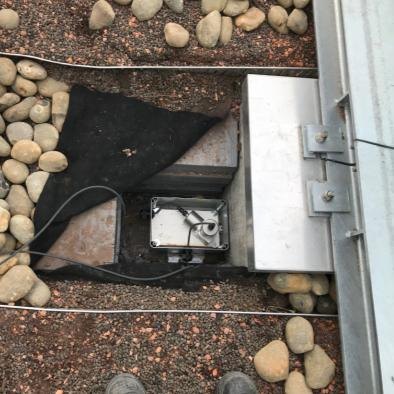
Three accelerometers on the 45th floor measured the tower’s motion in two directions, offset so that both sway and twist could be separated. For the first month, four more on the 19th and 39th floors captured higher modes. The anemometer recorded wind speed and direction above the roof, and pressure taps on the facade recorded the loads.
Damping grows with the wind
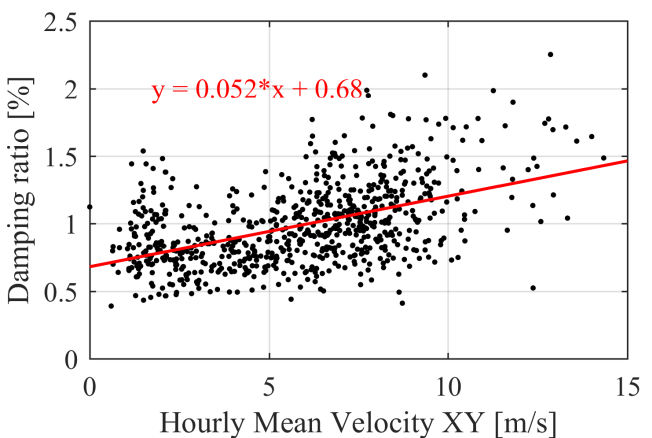
Using operational modal analysis, the team fitted the response spectrum around the first natural frequency for each hour of data and identified the damping ratio. The damping rises with the mean wind speed, the signature of aerodynamic damping acting on the full-scale structure.
Response against wind speed
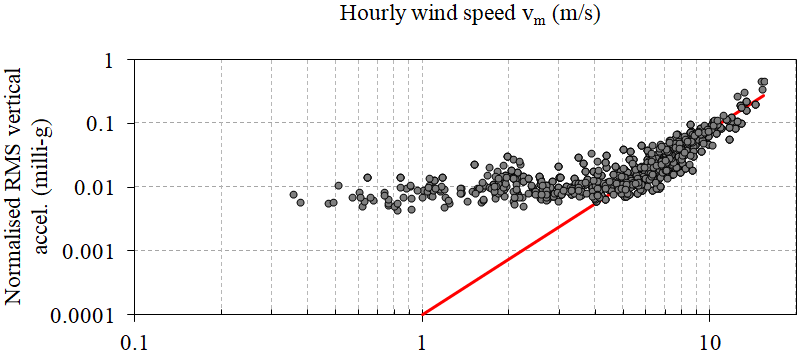
Over about 2,160 hours of data with wind above 6 m/s, the RMS acceleration grows steadily with the mean wind speed, almost in proportion to its cube. Comparing these measurements with the finite-element models and wind-tunnel tests was left as the next step of the work.
More in Research
Related work.
Interested in Wind-induced response of a slender tall building in London?
Tell us about your problem — we’ll tell you how we’d approach it.